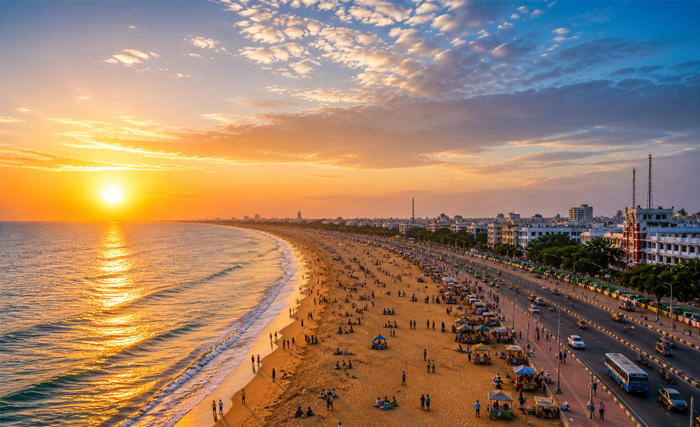
Marina Beach
One of the longest urban beaches in the world, Marina is a Chennai icon—ideal for sunrise walks, sea breezes, and a true sense of the city’s scale along the Bay of Bengal.
Heritage, coast, faith, and culture within easy reach of the congress venue—curated highlights for delegates extending their stay.
From the Marina shoreline to UNESCO-listed Mamallapuram, museums, spiritual landmarks, and day trips—plan visits around your programme with these trusted starting points.
One of the longest urban beaches in the world, Marina is a Chennai icon—ideal for sunrise walks, sea breezes, and a true sense of the city’s scale along the Bay of Bengal.
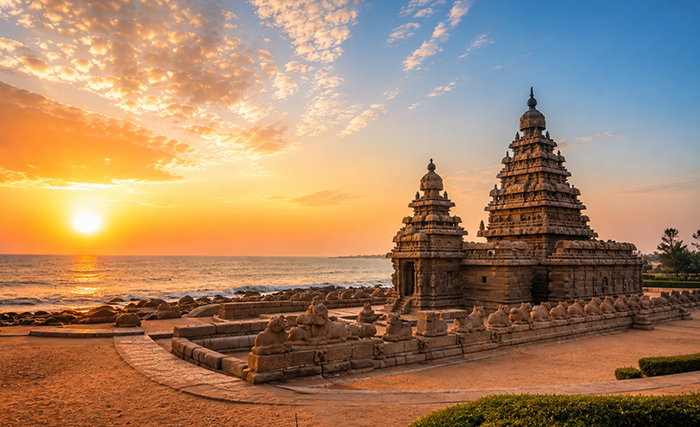
Mamallapuram (Mahabalipuram), a short drive from Chennai, is a UNESCO World Heritage Site famed for 7th- and 8th-century shore temples and rock-cut monuments—ancient stone artistry between casuarina groves and the sea.
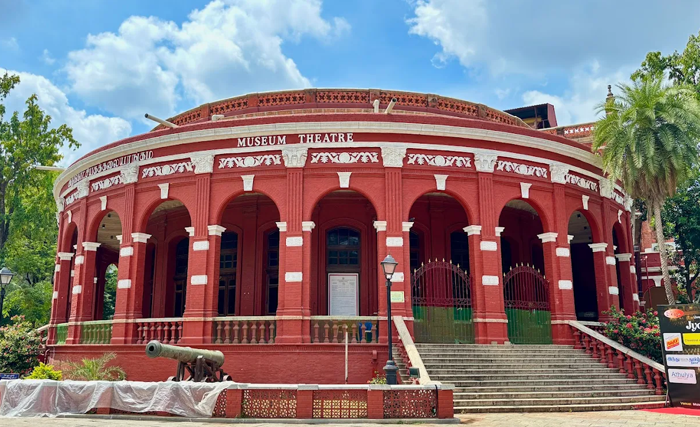
Part of the Government Museum, Chennai—among the oldest museums in the subcontinent, founded in 1851—the bronze galleries span six buildings and dozens of galleries, showcasing masterpieces ideal between congress sessions.
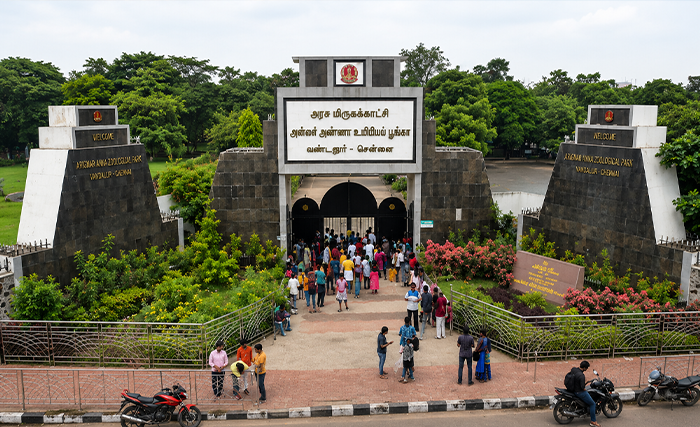
Arignar Anna Zoological Park (Vandalur Zoo) lies south of the city centre and Chennai International Airport. Established in 1855 as India’s first public zoo, it is one of South Asia’s largest zoological gardens and a rewarding half-day visit.
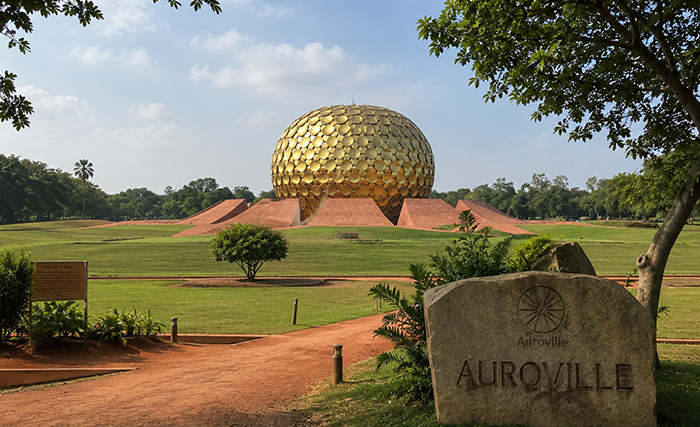
Roughly 15 km from Pondicherry, Auroville was founded in 1968 as an international township dedicated to human unity. The Matrimandir and surrounding greenbelt offer architecture, quiet walks, and a contemplative contrast to the city pace.
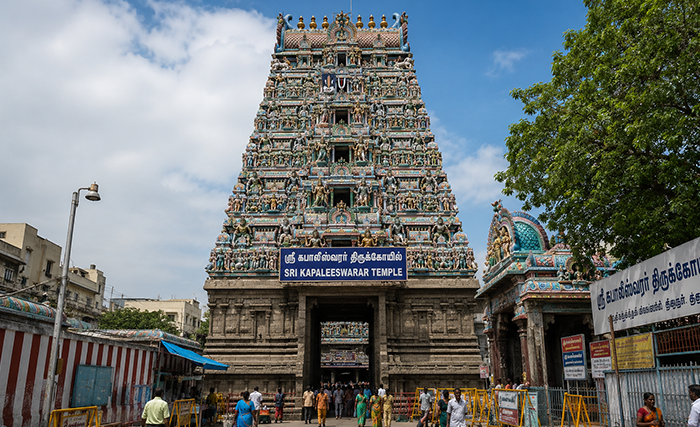
A historic Shiva temple in Mylapore, Chennai, celebrated for its 7th-century Dravidian architecture, colourful gopuram, and shrines to Kapaleeshwarar and Karpagambal—an essential stop for heritage and photography.
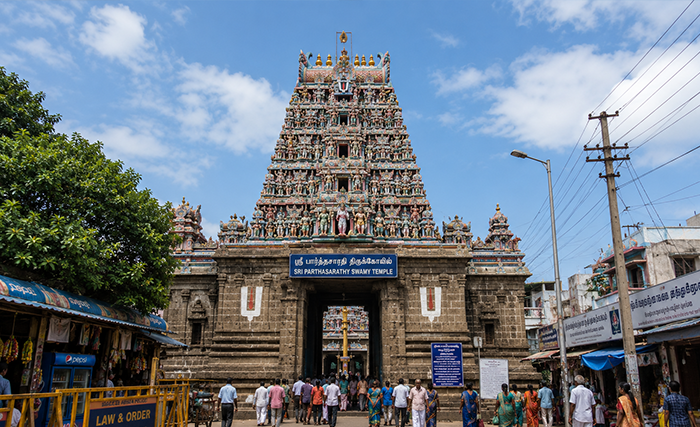
This Triplicane landmark enshrines Vishnu as Parthasarathy—Krishna as charioteer to Arjuna in the Mahabharata. Ancient texts recall lily ponds and tulsi groves here; the temple’s layered history and festival calendar draw devotees and visitors alike.
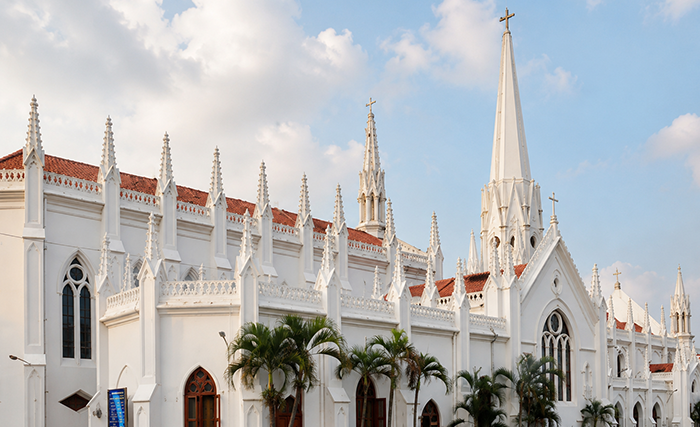
San Thome Basilica in Mylapore is a national shrine and minor basilica built over the traditional tomb of St. Thomas. The Portuguese rebuilt the site in 1523; neo-Gothic renovations in the 19th century shaped the striking façade you see today.
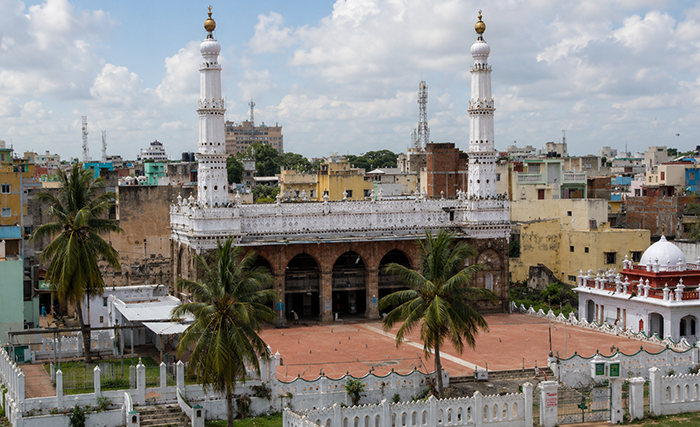
Triplicane’s “Big Mosque” was completed in 1795 in Mughal style for the Arcot nawabs’ family. Granite construction, a spacious prayer hall, courtyard, and ablution tank make it one of Chennai’s most architecturally significant Islamic monuments.
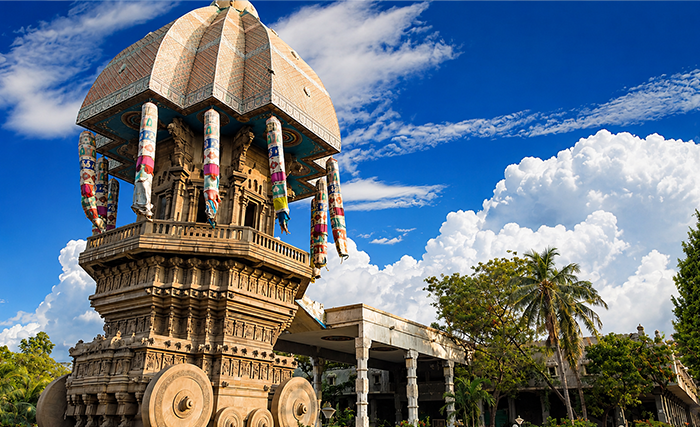
A monument to classical Tamil poet Thiruvalluvar, centred on a 133-foot stone chariot whose height echoes the 133 chapters of Tirukkural. Inscriptions and quiet gardens make it a meaningful cultural pause in central Chennai.
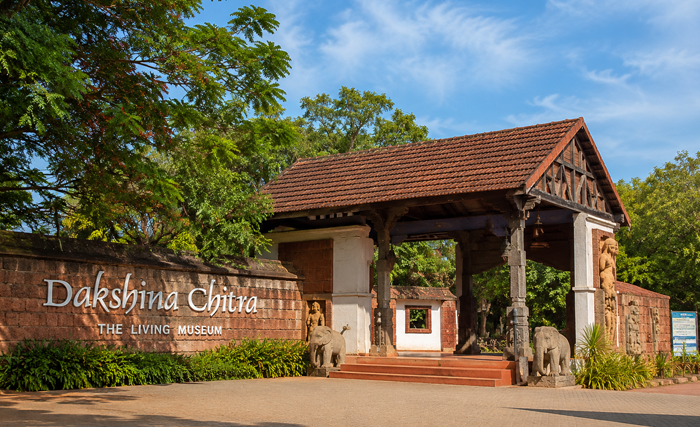
This living-history museum on the ECR recreates vernacular homes, crafts, and performing arts from Tamil Nadu and neighbouring states. Workshops and rotating exhibits offer an accessible immersion in South Indian design and tradition.
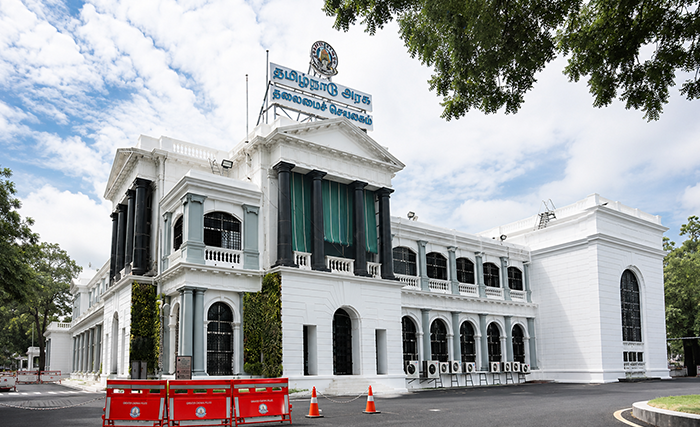
Founded in 1644, Britain’s first bastion in India still houses Tamil Nadu’s legislature precinct and the Fort Museum. Exhibits trace Chennai’s colonial evolution—an efficient visit for anyone interested in how the modern city took shape.
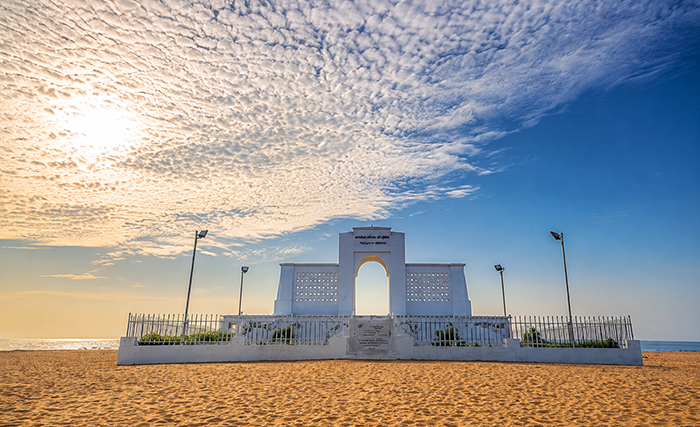
A quieter stretch of the Chennai coast in Besant Nagar, Elliot’s Beach is popular for evening walks, sea breeze, and the Karl Schmidt Memorial. Cafés and eateries nearby make it an easy unwind after congress sessions.
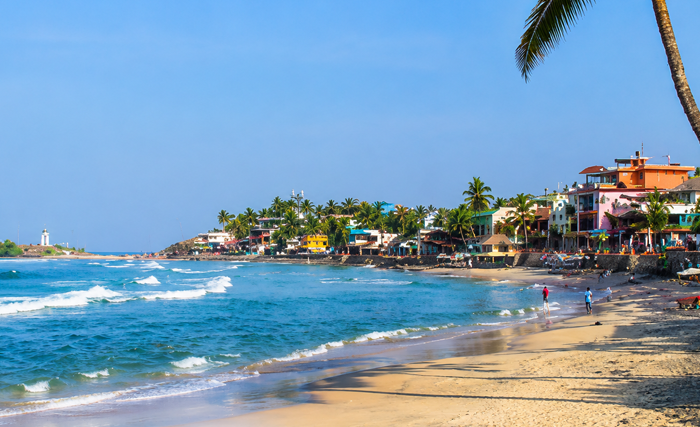
South of Chennai near Kovalam village, Covelong is known for its crescent bay, fishing boats, and water sports. The historic Dutch fort and seaside resorts make it a relaxed half-day escape from the city.
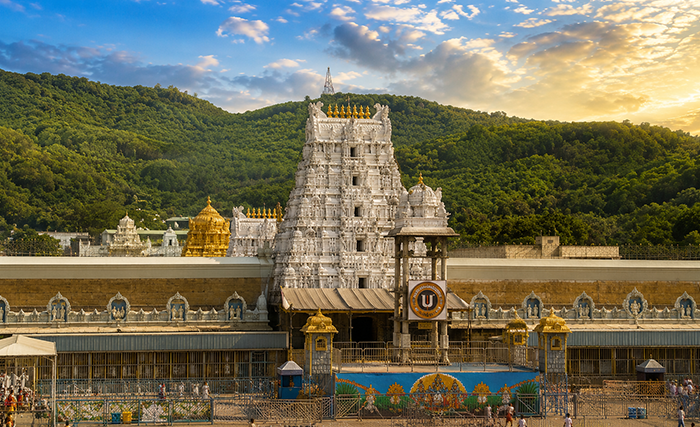
The Tirumala Venkateswara Temple at Tirupati is one of eight Svayam vyakta kshetras dedicated to Vishnu. In Andhra Pradesh, about 150 km from Chennai, it is a major pilgrimage centre with historic shrines in the Tirupati district.